"Let's explore our options."
The most expensive sentence in business.

It sounds like diligence. It's usually fear with a calendar invite.
"Let's explore our options" feels responsible. Measured. Grown-up. It earns nods around the table and buys everyone another fortnight of feeling like progress is happening.
It's also the most expensive sentence most organisations say. And the reason you never catch it is that the cost never lands on an invoice. It lands everywhere else.
When a project goes over budget, you see it. A number. A line item. An awkward chat with finance. Indecision isn't so considerate. It bills you silently, in four currencies, and none ofthem show up in the accounts.
It bills you in time.
Every reopened decision is a meeting that spawns another meeting. Same five people, same slides, same "let's just sanity-check this once more." A call that should take a session takes a quarter. It clogs your diary like hair in adrain.
It bills you in momentum.
Teams can smell an open decision. So they hedge. They build the thing two ways "just in case." They stop sprinting, because the direction might lurch under their feet next week, and honestly, they're not wrong to worry.
It bills you in money.
The obvious kind: the 4 or 5 figure project you've delayed three times, repricing at every delay. And the invisible kind, which is worse: the competitor who shipped while you were "aligning," the window that doesn't politely reopen the moment you're finally ready.
And it bills you in morale.
Nothing corrodes a good team faster than watching decisions get made, then unmade, then made again. Your sharpest people, the ones with options, notice first. And leave first.
Here's the cruel twist. In the moment, exploring options genuinely feels like the safe choice.
The downside of a wrong decision is vivid and specific. You can picture the failed rebrand, the wasted spend, the colleague doing the "I did flag this" face. The downside of waiting is abstract. You can't picture it, because it's built entirely from things that didn't happen.
So the brain does what brains do. It weights the scary-vivid risk over the boring-invisible one, and votes to wait. Multiply that by everyone in the room, each secretly relieved that nobody's forcing a call, and you get a company that mistakes deferral for prudence. Everyone leaves feeling like a responsible adult. Nobody hears the meter running.
To be fair, not all exploring is stalling. There's a real difference, and it's worth being honest about which one you're in.
Productive exploration has a deadline, a defined question, and a specific thing it's trying to learn. It ends. You go in unsure whether it's A or B, you find the thing that breaks the tie, you choose. That's not indecision. That's just decisions, working as designed.
The expensive kind has none of that. No question. No definition of "enough." No date it resolves. It's exploring as a lifestyle choice. The tell is simple: if you can't name the specific piece of information that would let you decide, you're not exploring. You're hiding.
Most leaders underestimate their indecision tax by a mile, because they only count the visible currency. They'll tell you a stalled decision cost "a couple of weeks." They won't count the team that hedged for a quarter, the hire they never made, the campaign that limped out late into a worse moment.
The fix isn't to start firing off decisions like a caffeinated game-show host. Speed without a frame is just a faster way to be wrong. The fix is a frame: name what you're optimising for, put the real trade-offs on the table, and agree that the meeting ends in a call someone owns.
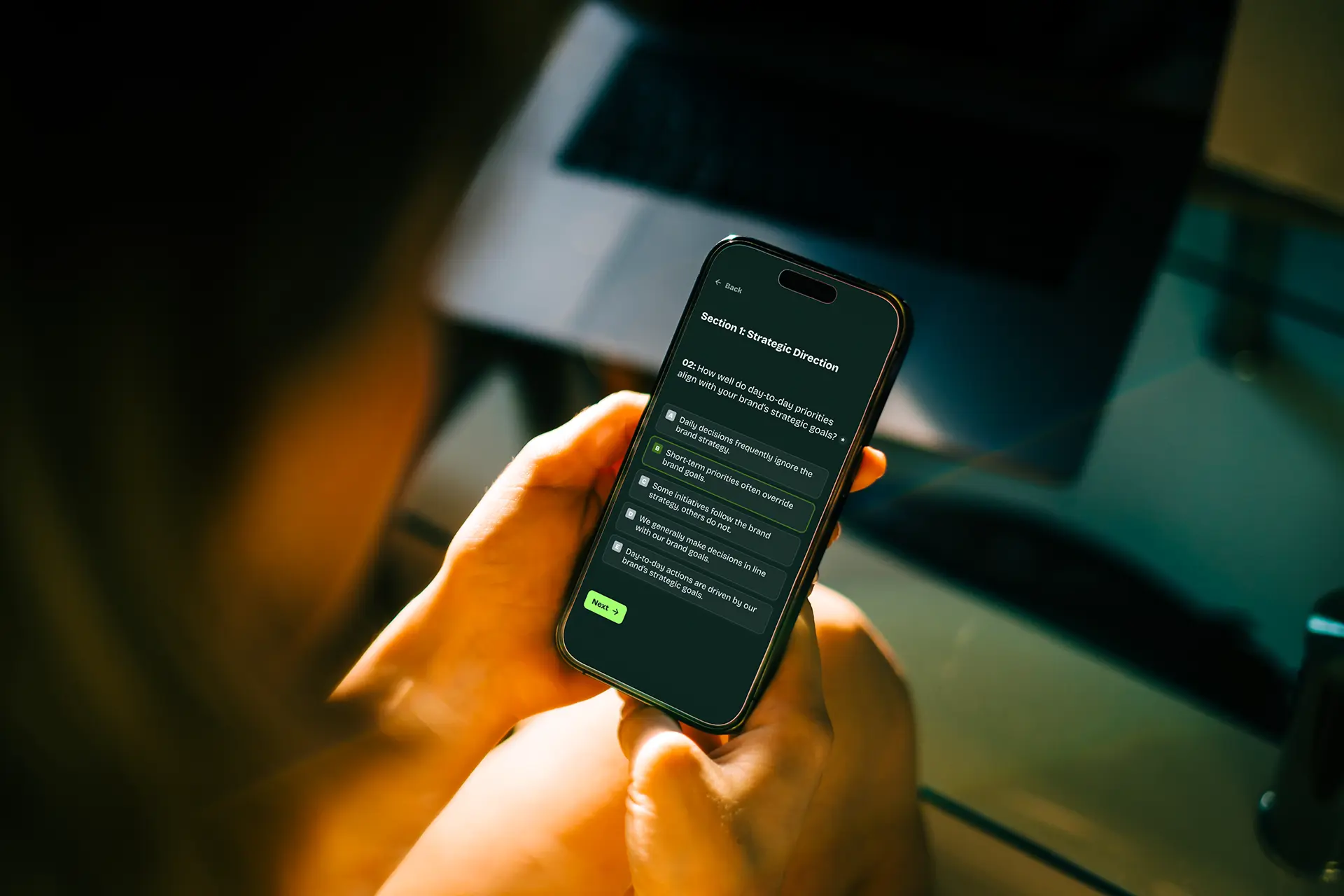
That's exactly what the Independence Index is built for. Fifteen minutes, four decision dimensions, and a clear read on what indecision is actually costing you, in the currencies you've not been counting.
The most expensive sentence in business isn't "we made the wrong call." Wrong calls get fixed, oftenfast. It's "let's explore our options," said for the fourth time, about the same decision, while the meter runs.